Understanding Existing Septic Systems
Septic Inspections in Salida, CO
Need a clearer picture of your septic system? Book Now
Understanding Existing Septic Systems
Need a clearer picture of your septic system? Book Now
See the Chaffee County onsite wastewater permit application for site plan, installer and inspection requirements.
An existing septic system can be difficult to evaluate from the surface. The yard may look normal even when the tank or distribution system has problems. Conversely, a wastewater concern may turn out to involve a limited component rather than the entire system.
Septic inspections help property owners gather information before making decisions about purchases, renovations, repairs, or replacement. The findings depend on the inspection scope, accessibility of components, available records, and actual conditions at the property.

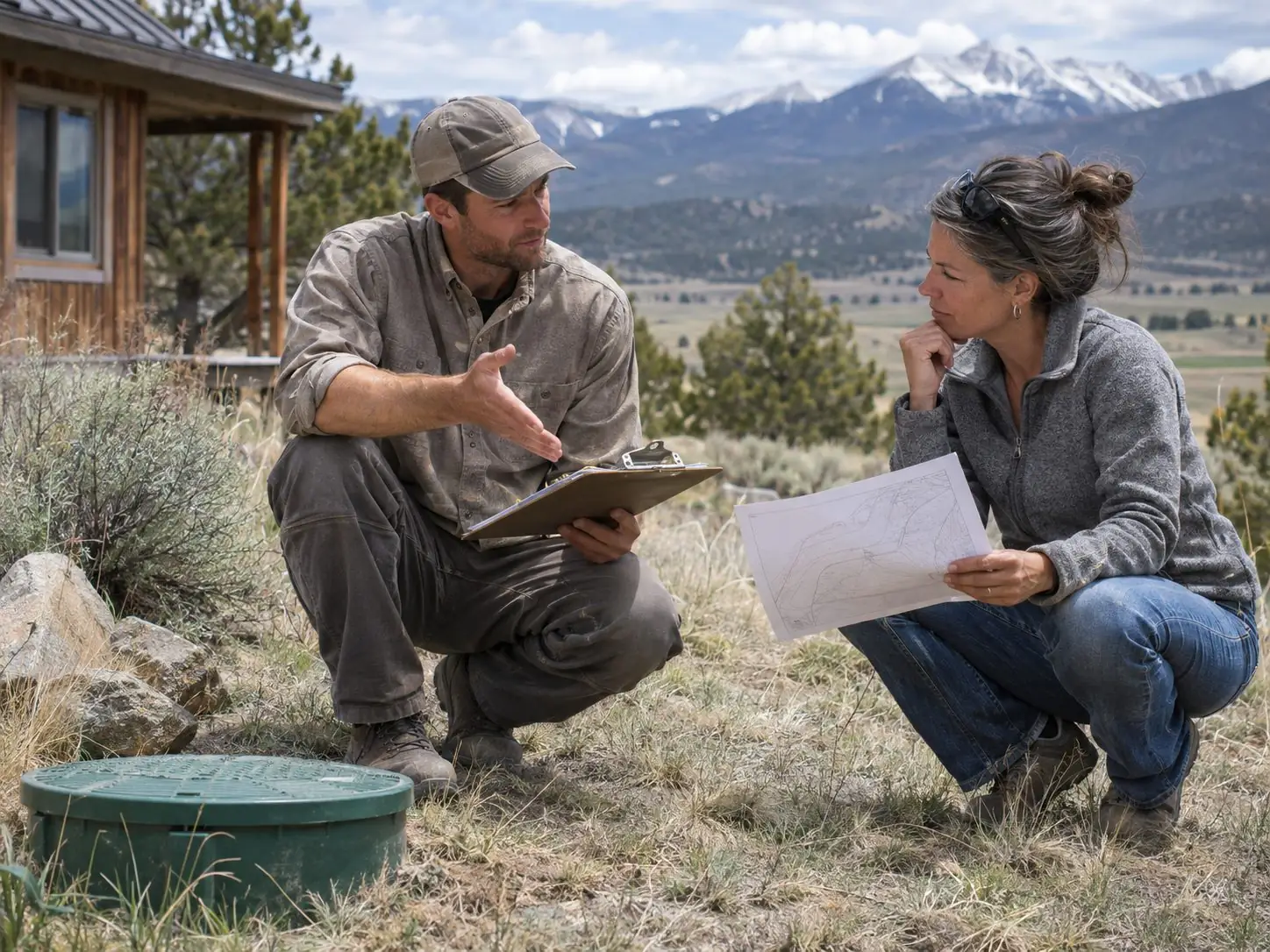
A septic inspection is a structured look at the existing system and its observable condition. The scope may include reviewing available records, locating accessible components, examining visible signs of problems, and assessing the condition of components that can be safely evaluated. ## Why Inspection Scope Matters Not every inspection includes the same testing or level of access. Some evaluations focus on accessible tank components and visible conditions, while a more detailed investigation may require additional equipment, excavation, or specialized testing. An inspection should not be treated as a guarantee of future system performance. Buried conditions and soil treatment capacity may not be fully established through a limited visual examination. ### Local Requirements and Property Transfers When an inspection is connected to a sale or a regulatory requirement, the applicable county rules and requested documentation should be confirmed. A general condition assessment is not necessarily the same as an inspection required by a public authority.
Buying a property with a septic system means taking responsibility for wastewater infrastructure that may be largely underground. Understanding its condition and available permit history can help buyers ask better questions. An inspection may identify visible defects, access limitations, or evidence that additional evaluation is warranted. Buyers should also review whether the system's approved capacity is appropriate for the property's intended use.
Older septic systems may have limited documentation or components that differ from current designs. Their age alone does not establish failure, but condition and maintenance history are important. A review can help identify deterioration, accessibility concerns, or symptoms that deserve further investigation. Any recommendation for repair or replacement should reflect the specific findings rather than age alone.
Slow drainage, intermittent backups, odors, and unexplained wet ground can justify an evaluation of the septic system. The symptoms may be connected to plumbing, tank components, distribution, or soil treatment performance. Inspection findings help narrow the questions and determine what further investigation is appropriate. An inspection may identify a clear issue, or it may show that additional testing is needed.
Adding bedrooms, changing occupancy, or making other building improvements can raise questions about an existing system's capacity and approved use. The planned change should be considered before assuming the current septic system is sufficient. A review of system records and current conditions can be useful when discussing a proposed renovation with the applicable authorities. Formal design or permit review may still be necessary.
Inspection information is most useful when the property owner understands what was observed and what could not be determined. Accessible components, visible symptoms, and available records all contribute to the overall picture. A finding may call for routine maintenance, a specific repair, further testing, or replacement evaluation. A clear explanation of those distinctions helps owners make informed decisions.
We focus on the condition and questions that matter when evaluating an existing system.
An inspection should explain what can be evaluated and what remains uncertain.
A problem should be understood before deciding whether repair or replacement is appropriate.
Existing records, intended use, and Chaffee County requirements may affect the conclusions.
Buying a home, investigating problems, or reviewing an older septic system? Tell us what you need to know.
Free — no obligations
Determine whether the evaluation relates to a purchase, maintenance concern, renovation, or suspected failure.
Consider known system locations, permits, maintenance information, and prior inspection findings.
Clarify accessible components, the intended observations, and any additional evaluation requirements.
Examine accessible elements and observed conditions within the agreed scope.
Explain observed concerns, limitations, and any appropriate next steps.